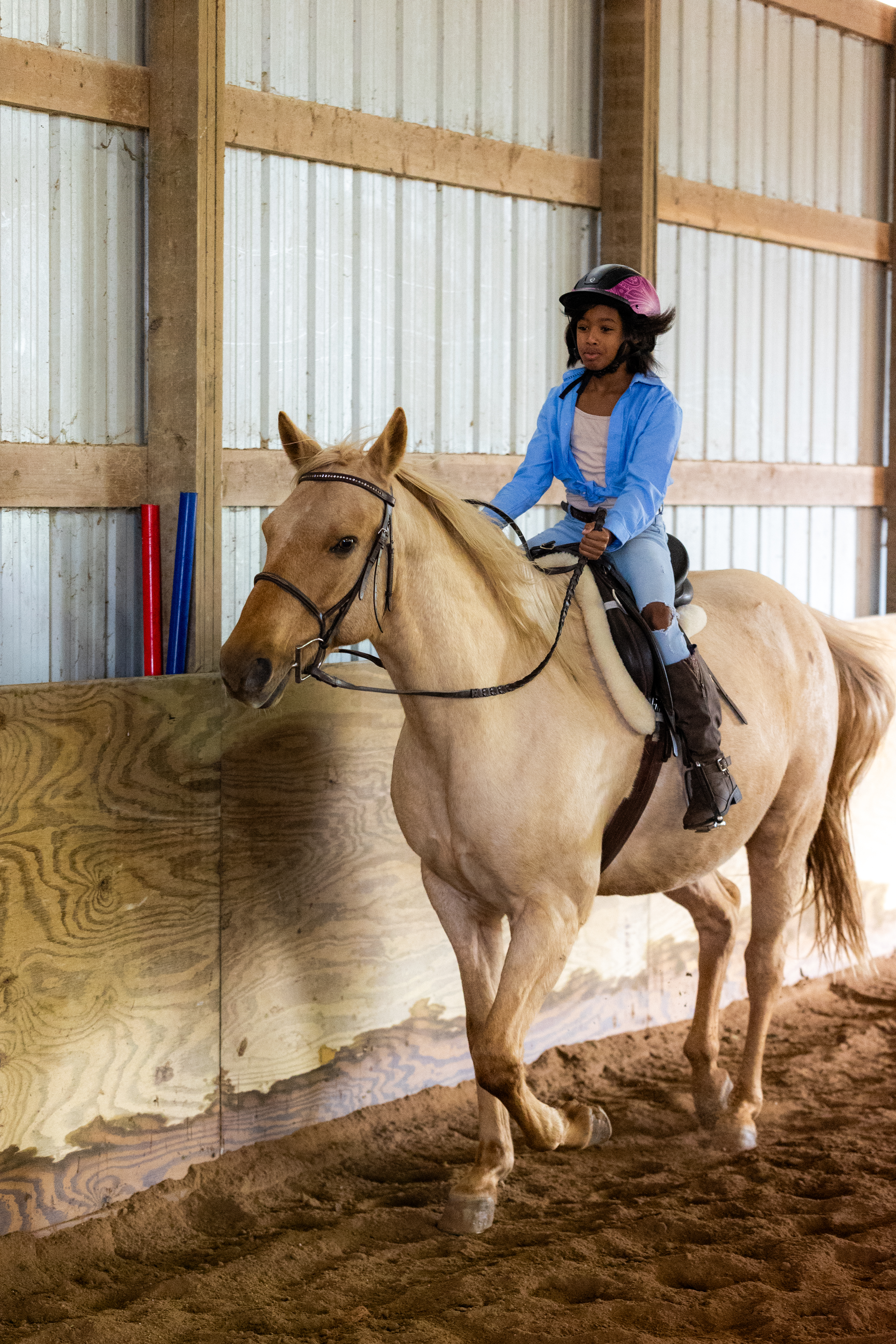
Our goal is to ride and teach in alignment with the classical approach to horsemanship—an approach that emphasizes harmony between horse and rider through the effective use of fundamental aids. Achieving this harmony requires the rider to be well-balanced and to use their seat, legs, and hands independently.
Foundations of Balance
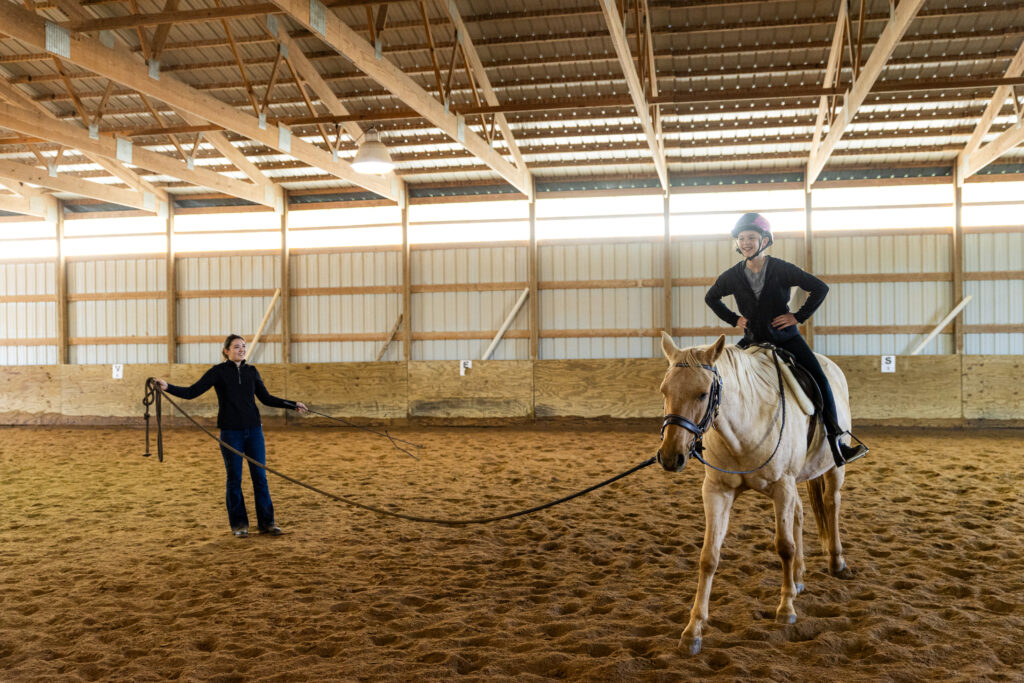
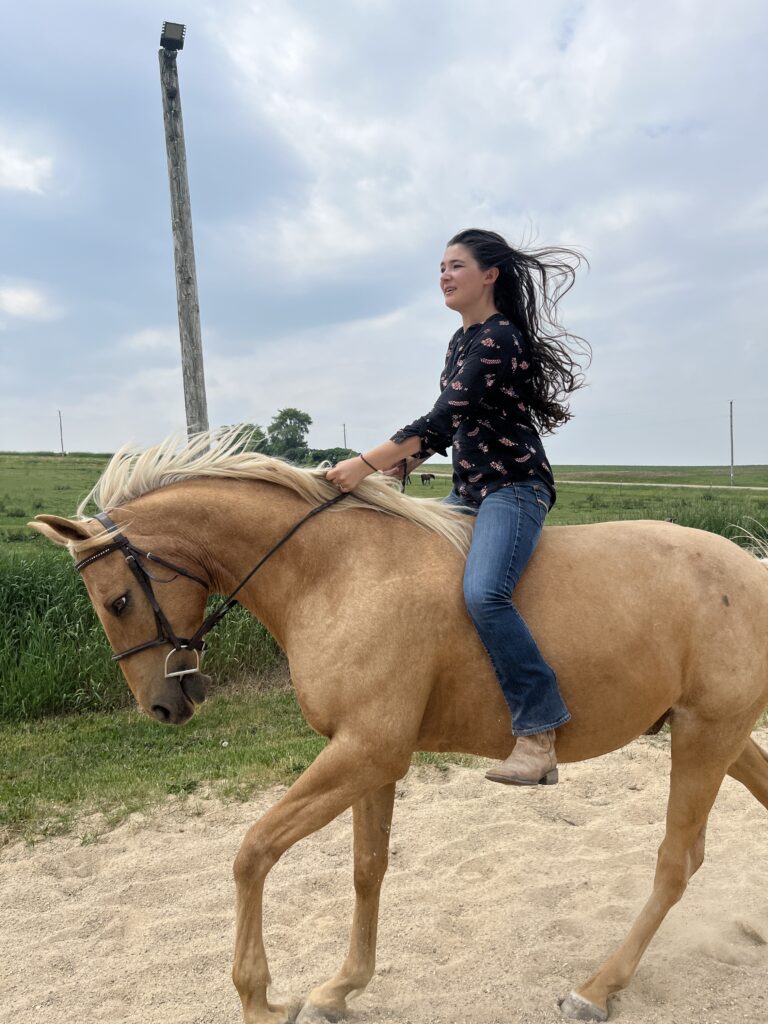
Our training begins with cultivating the rider’s balance. Each lesson incorporates lunge line exercises designed to strengthen the rider’s ability to maintain stability and control. Through these exercises, riders develop an independent seat, hands, and legs—essential elements for effective communication with the horse.
A well-balanced rider becomes a confident, secure, and safe rider. Without balance, horse and rider cannot move together in true harmony.
Developing Independence
Each lesson is thoughtfully designed to help riders become more independent in the saddle. Students are challenged with a variety of progressive exercises, allowing them to learn through experience, repetition, and correction—a dynamic process rooted in trial and error.
As riders grow in skill, exercises increase in complexity until each movement is performed with consistency and control. Our goal is to cultivate true independence in the use of the riding aids—seat, legs, and hands—beginning with a well-balanced seat that functions separately from the hands and legs.
Independent riding is a core objective for all our students, along with a solid understanding of horsemanship. This foundation enables riders to communicate clearly, confidently, and effectively with their horses.
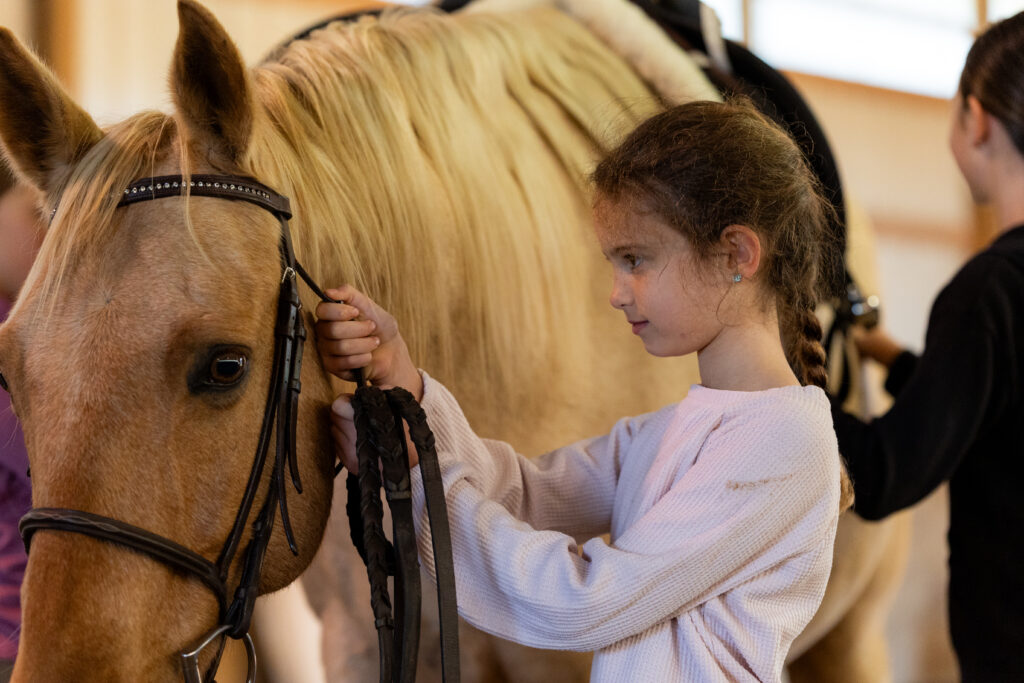
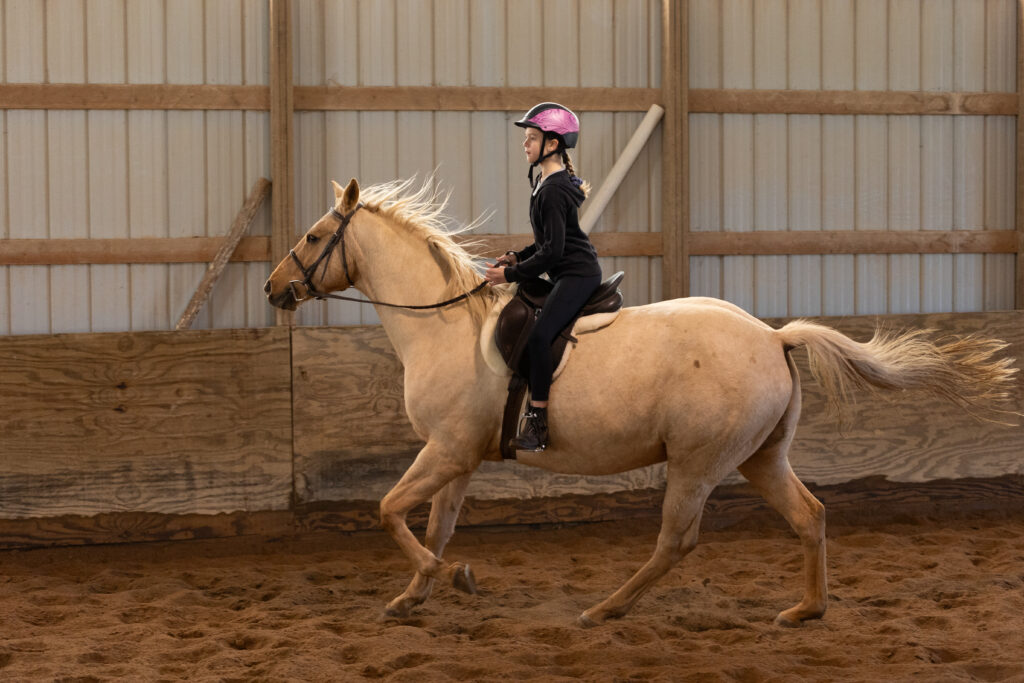
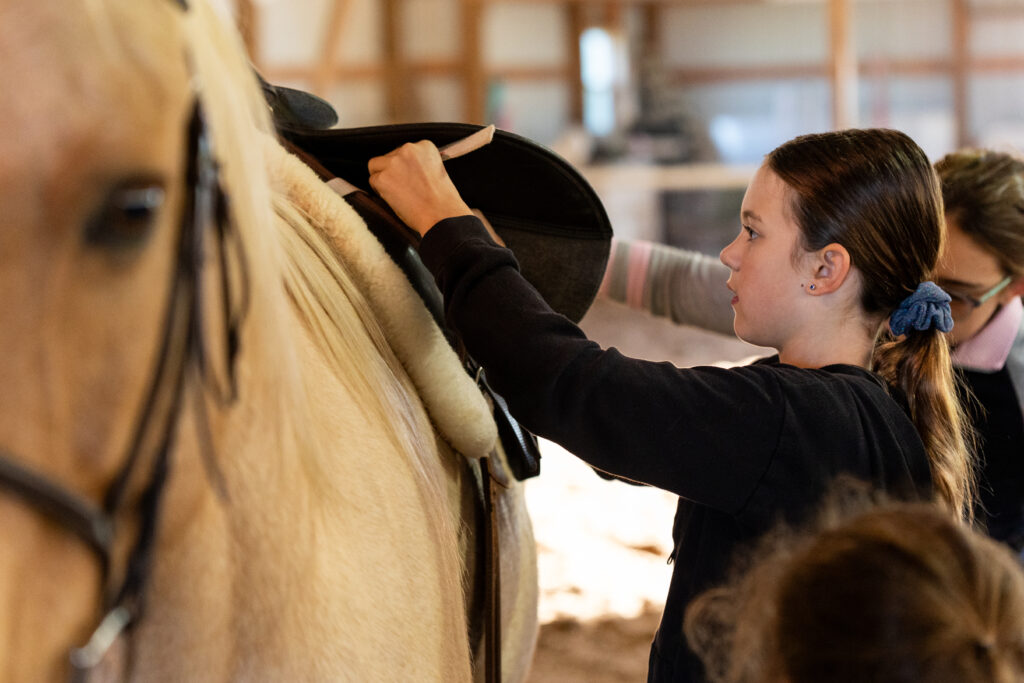
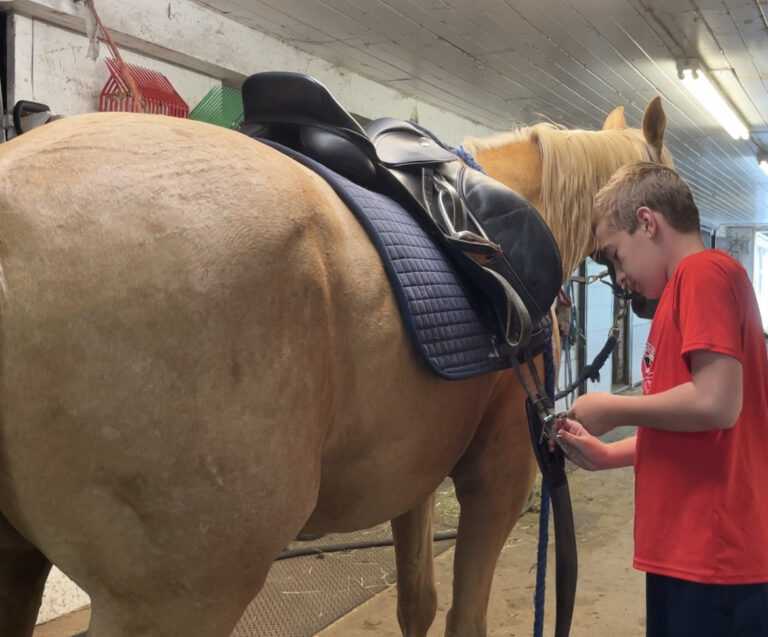
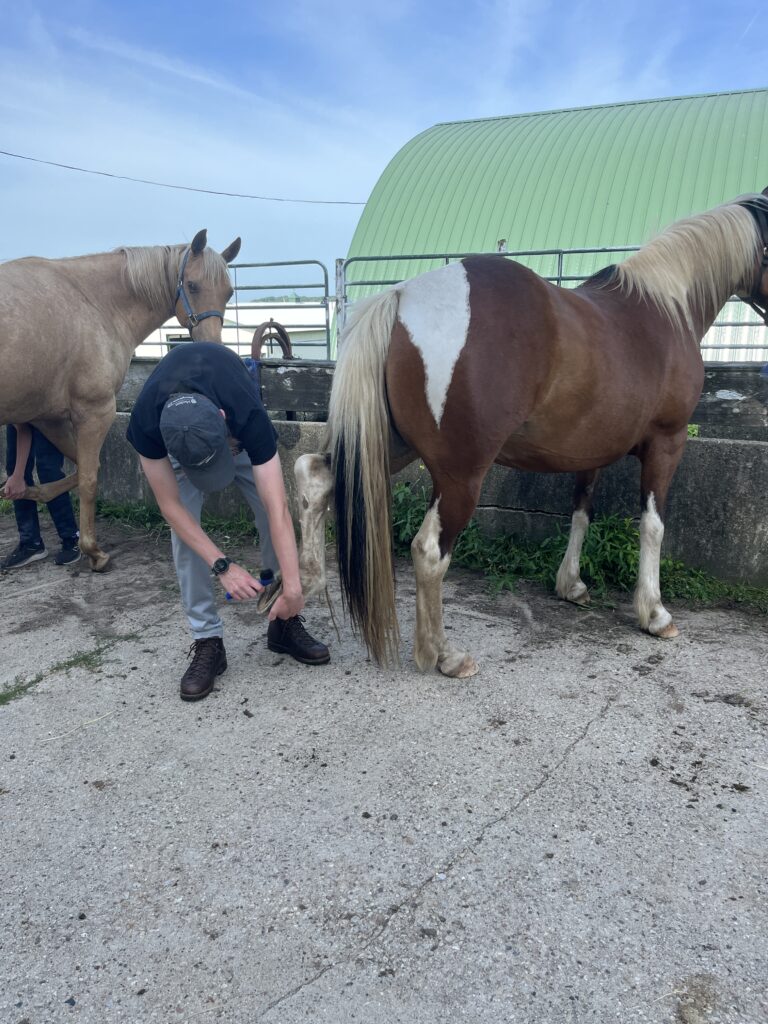
By the end of the first trimester, most students will be confidently riding at the walk, trot, and canter, with basic control of direction and speed. They will also feel comfortable grooming, tacking up, and caring for their horse.
Experience, Confidence, Proficiency
We believe every rider progresses through three key phases when learning new skills: experience, confidence, and proficiency.
The first step is experience. Our skilled, patient school horses help new riders explore fundamental exercises with ease, allowing them to feel the correct timing, understand the use of aids, and begin recognizing how the horse responds.
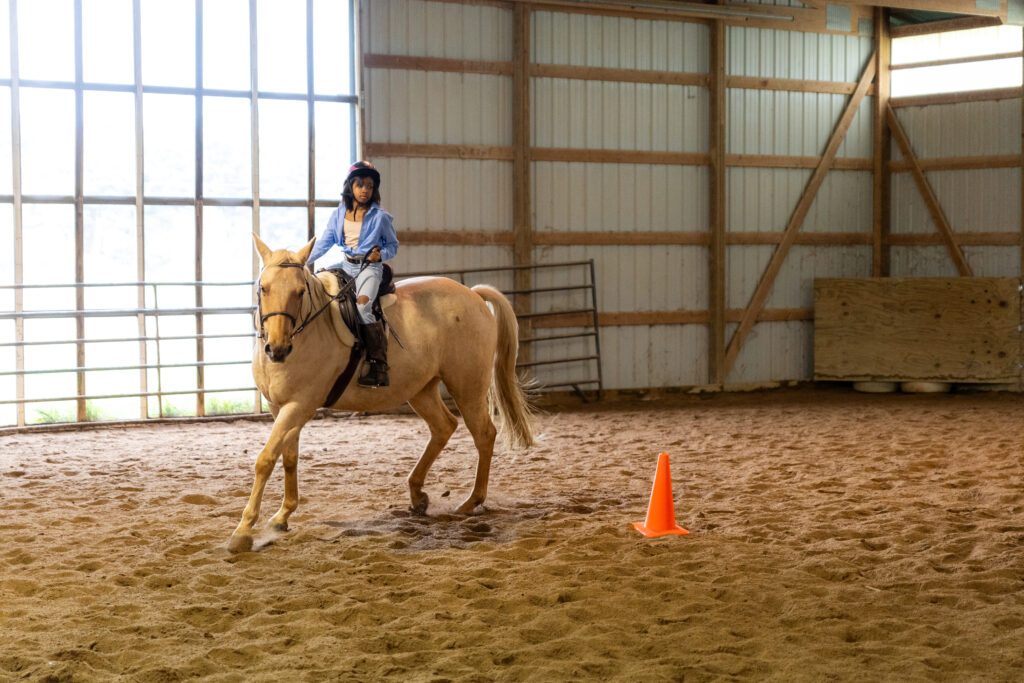
For example, during simple steering exercises, our horses respond predictably, enabling riders to focus on developing the proper timing and feel for guiding the horse. Effective steering requires the rider to remain aware of and responsive to the horse’s feedback.
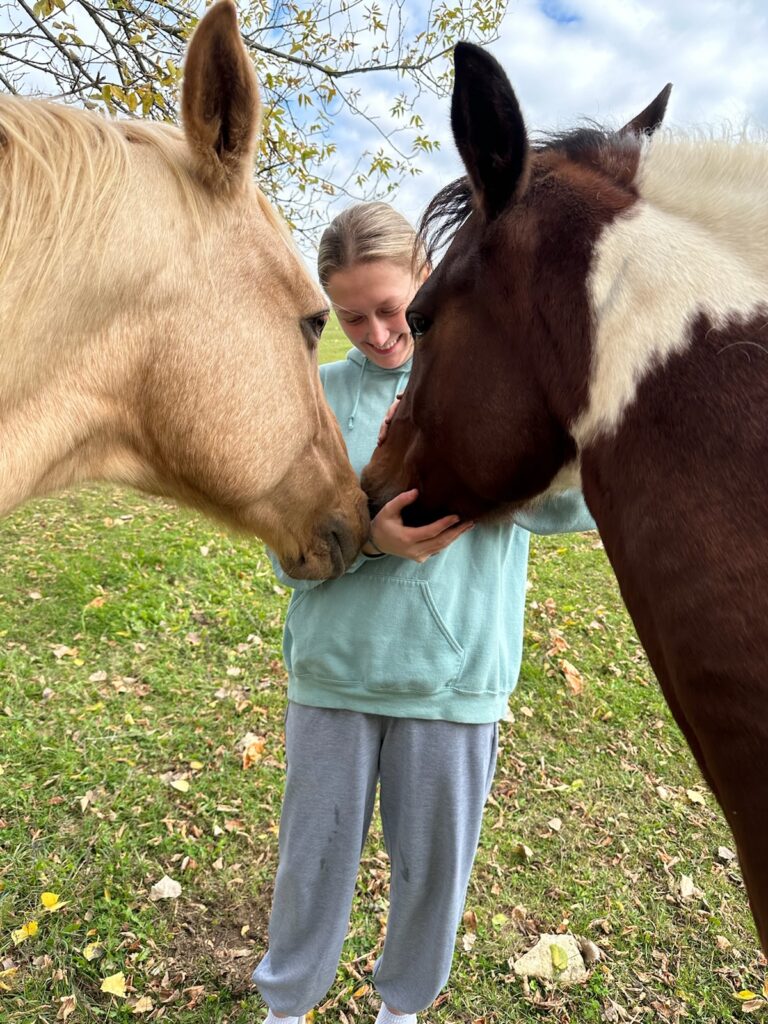
With repetition, riders gain confidence. We gradually introduce added challenges—such as incorporating speed control or increasing precision—to deepen the rider’s understanding. These new elements encourage better communication and build trust between horse and rider.
As riders overcome these challenges, they achieve proficiency. Mastery of a skill comes from thoughtful practice, consistent feedback, and a willingness to engage with difficulty.
This three-phase process forms the foundation of our dynamic, hands-on approach to learning. To gain the full benefit, we strongly encourage riders to attend all scheduled lessons throughout each session. Missed lessons can disrupt learning momentum and delay progress.